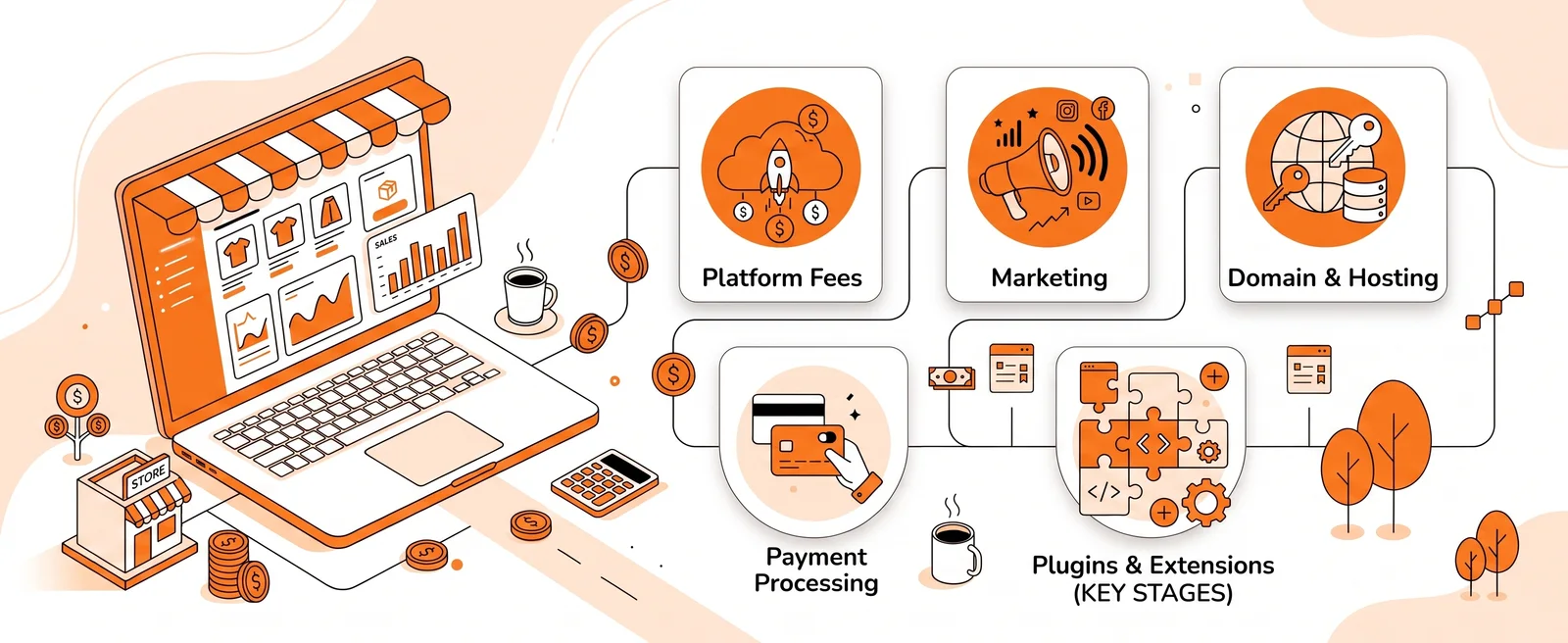
The plan price is the smallest number on the bill, and it is the only one the platform puts on its pricing page. Shopify's Basic plan is 39 dollars a month in the US, or 29 paid yearly, by Shopify's own page. Under it sit the lines that decide what the store really costs: the card rate on every sale, a 2 percent fee on Basic for using another payment provider, the apps you add one campaign at a time, and the domain. WooCommerce puts its smallest number lower still, at zero, and then charges you for hosting that can run a checkout and for extensions that renew every year.
How much a Shopify store really costs is a question you answer from your own statement, not from either platform's page. This is how to read that statement, the public prices for both platforms as they stand, the two lines that grow with your sales, and what the bill looks like for a store that was built rather than assembled.
The short version Split your store's bill into fixed lines and percentage lines. The fixed lines are the plan or the hosting, the apps or extensions, the theme and the domain, and they are what the pricing pages show. The percentage lines are the card rate and, on Shopify with an outside gateway, the platform's own cut, and they grow with every sale. Add both kinds for last month, then divide by your orders. That number is what the store costs you per order, and it is the only one worth comparing.
Why the plan price is the wrong number#
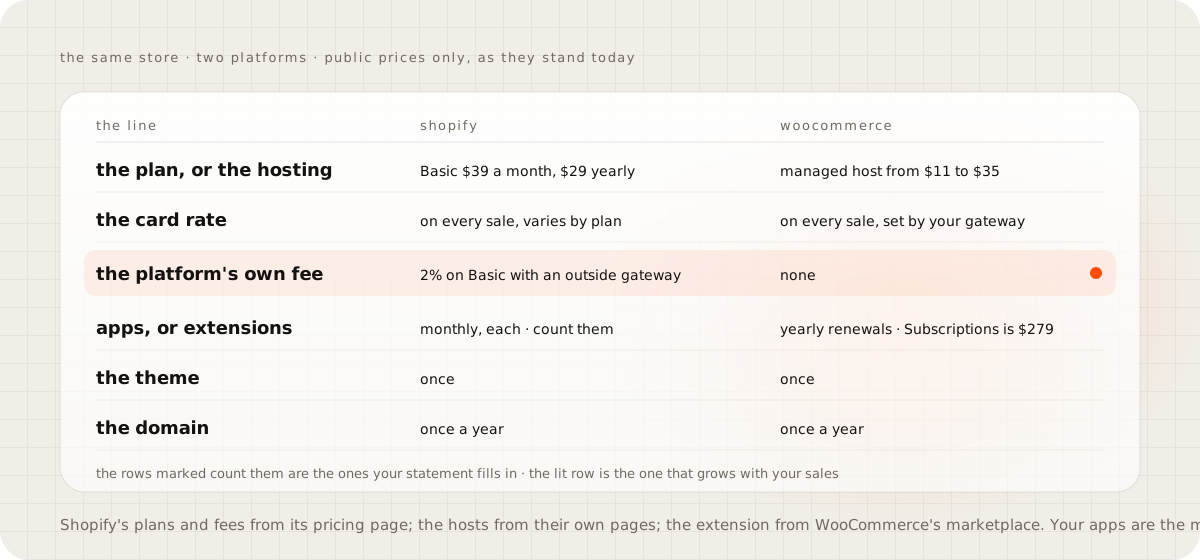
A store's bill has two kinds of line, and the pricing pages show one kind. Fixed lines cost the same whether you sell one kit or a thousand: the plan, the hosting, the apps, the theme, the domain. Percentage lines are taken from every sale: the card rate, and on some platforms a fee on top of it. A store doing 2,000 dollars a month barely notices the percentage lines. A store doing 50,000 a month is paying more in percentages than in everything else combined, and the plan page never mentioned them.
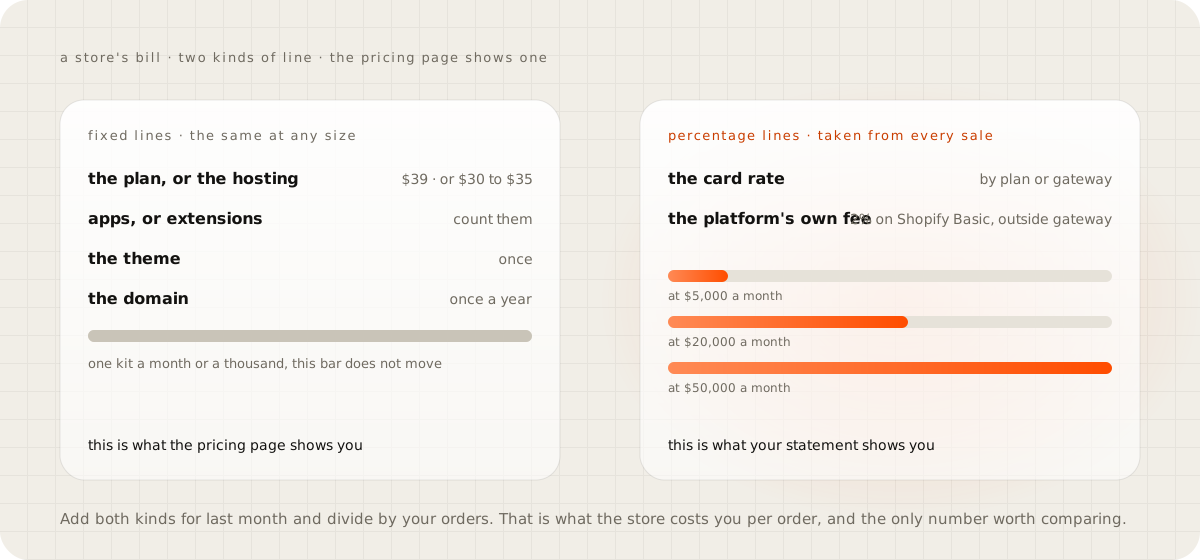
The other reason the plan price misleads is time. Fixed lines arrive on two clocks, monthly and yearly, and the yearly ones land as one surprise. A WooCommerce extension that costs 279 dollars a year, which is what WooCommerce Subscriptions lists today, is about 23 dollars a month spread out, and it does not feel like 23 dollars a month. It feels like nothing for eleven months and then a bill.
A Shopify bill, line by line#
Take the public prices as they stand. Basic is 39 dollars a month, or 29 on a yearly commitment. Grow is 105 or 79. Advanced is 399 or 299. Plus starts at 2,300 a month. Those are the US prices. Shopify prices by country, and its page shows the price of the country you open it from, so check yours. Every plan takes a card rate on each sale through Shopify's own payments, and the rate varies by plan. If you use a different payment provider, Shopify adds its own fee on top: 2 percent on Basic, 1 percent on Grow, 0.6 on Advanced and 0.2 on Plus.
Then the apps. Reviews, a pop-up, a bundle builder, an upsell, a loyalty widget, an email tool. Each is priced by its maker, usually monthly, and each was installed for a reason someone has forgotten. Then a theme, bought once, and the domain, once a year. Your apps and your card rate are the two lines I cannot read from here and you can read in five minutes from your last statement. Put them into the Shopify vs WooCommerce cost calculator and the two bills come out side by side, at your sales and at double them.
A WooCommerce bill, line by line#
The software is free, and the bill starts with hosting that can run a checkout, because the checkout cannot be cached, which is the whole of the guide on why a WooCommerce checkout is slow. Managed hosting that can run a checkout runs from about 11 dollars a month at Cloudways for a 2 GB server, through 28 at WP Engine and 30 at SiteGround once the first-year offer ends, to 35 at Kinsta, or 30 on a yearly plan. The first-year offers are much lower and they end. Cheaper shared hosting exists and puts your checkout on a shared processor, and you pay for that in abandoned carts instead of dollars.
Then the extensions, which are the apps by another name, and most of the serious ones renew yearly. Then the theme, the domain, and the card rate from whichever gateway you choose, which is the same shape as on Shopify. What WooCommerce does not have is the platform's own percentage on top of the card rate. That absence is the single biggest difference between the two bills, and it only shows once the store is busy.
The two lines that grow with you#
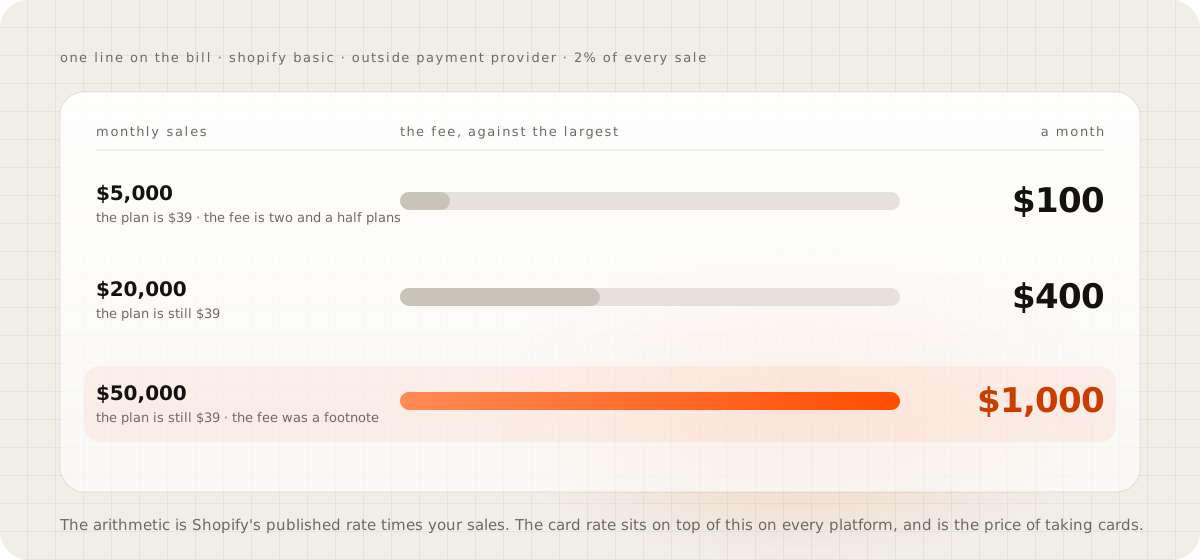
The card rate grows with sales on both platforms, and it is the price of taking cards, so I do not argue with it. The platform's own fee is the one to watch. On Shopify Basic with an outside payment provider it is 2 percent of every sale, by Shopify's page. On 5,000 dollars of monthly sales that is 100 dollars, two and a half times the plan. On 20,000 it is 400. On 50,000 it is 1,000 a month, for a fee that was a footnote when the store was small.
The apps are the other line that grows, not with sales but with time. Each campaign adds one, nobody removes any, and the monthly total climbs in steps too small to notice. The fix is the same as for plugins on a WooCommerce checkout: list them, write the job of each in one sentence, and remove the ones you cannot name.
What a store costs when it is built#
The storefront on the homepage was built rather than assembled. It has no apps to rent and no plugin list to prune, and it runs on the same edge network as this page, whose free plan allows 100,000 requests a day before the next tier at 5 dollars a month. The ledger on the homepage puts the whole monthly bill for a system of that size at about 5 dollars, with every account in the owner's name. The card rate still applies, because someone has to move the money. The apps and the platform percentage do not exist, because nothing is rented.
That is not free, and I will not dress it up. The build is a fixed price, agreed before it starts, and it is the largest number in this whole guide. What moves that number is the guide on what custom software costs a small business. Whether it pays back depends on the two growing lines. A store at 5,000 a month will not recover a build from a 2 percent fee. A store at 50,000 a month is paying 12,000 dollars a year on that one line, which is build money.
"Shopify is simpler, and that is worth the money"#
It often is. The checkout is fast because you cannot touch it, the hosting is somebody else's problem, and the app store fixes most things in an afternoon. For a store with a dozen products and no custom flow, Basic on a yearly plan with Shopify's own payments is the right answer, and I would tell you so on a call. The test for when a build is worth it at all is the guide on when a small business should build custom software.
Pay for the simplicity knowingly. Know which lines are percentages, know what they come to at your current sales, and know what they come to at twice your current sales. The moment to reconsider is when the percentage lines pass the fixed lines, or when the store needs a flow the app store does not sell, like a quote that prices itself from the area and lands in the cart, which is the guide on instant quotes.
Read your statement this week#
Open last month's statements, the platform's, the payment provider's and the card for the apps, and write every line on one page in two columns, fixed and percentage. Total each column. Divide the whole by last month's orders, and write that number at the top: what the store costs you per order. Then do the same page for a month at double your sales, and watch which column moves.
Questions people ask
How much does a Shopify store really cost a month?
The plan is 39 dollars a month on Basic, or 29 paid yearly, by Shopify's own pricing page for the US; Shopify prices by country. The bill is the plan plus the card rate on every sale, plus a 2 percent fee on Basic if you use another payment provider, plus every app you add, plus the domain. Read your statement, not the plan page.
Is WooCommerce cheaper than Shopify?
The software is free and the bill is not. Hosting that can run a checkout starts around 30 to 35 dollars a month at a managed host, extensions renew yearly, and the card rate is the same shape. There is no platform percentage on sales, which is the line that grows with you on Shopify.
What are the costs people forget on an online store?
The yearly renewals that arrive as one surprise, the percentage lines that scale with sales, the apps installed for one campaign and never removed, and the developer hour when an update breaks the checkout. None of them is on the plan page.
What does a store cost to run if it is built rather than assembled?
The storefront on my homepage runs on the same free-plan edge as this site, and the ledger on the homepage puts the monthly bill for a system that size at about 5 dollars. The card rate still applies. The apps and the platform percentage do not exist.