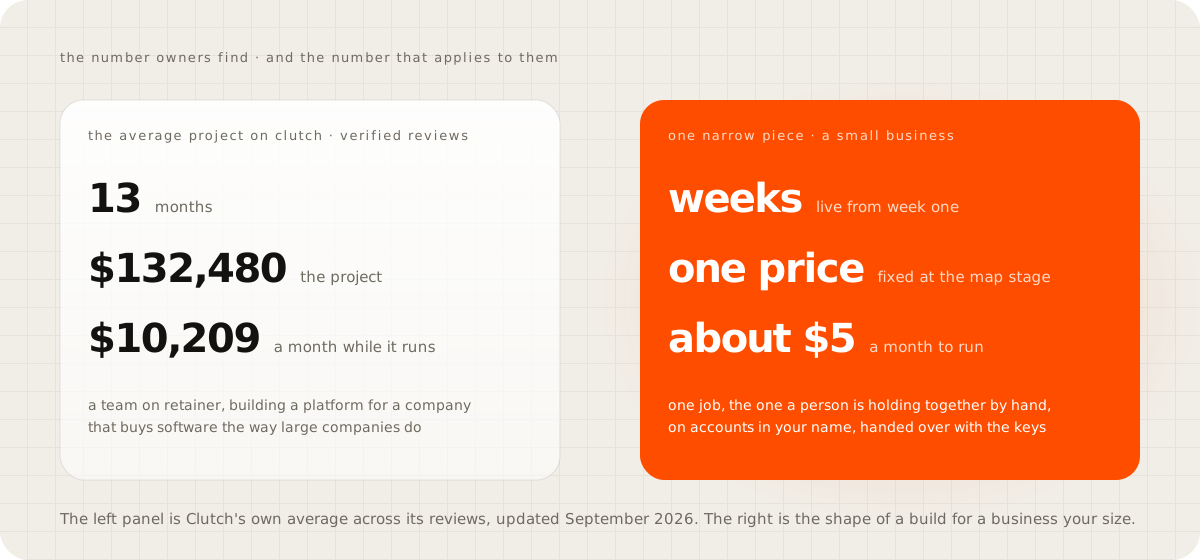
The average software project on Clutch costs 132,480 dollars and takes about 13 months, by the platform's own pricing guide, which is built from its verified reviews. That is the number owners find when they search for what custom software costs, and it is the wrong number for a small business, because it describes companies buying software the way large companies do. The systems I build for small businesses each replace one job and are priced as one fixed number before they start, and a system sized like the lead desk runs for about 5 dollars a month.
Custom software cost for a small business is a different question from the agency one, and it has a different answer. This is what moves the price, why I price the work rather than the hour, what it costs to run once it exists, and the honest case for buying cheaper elsewhere.
The short version The price follows the job, and you hold most of the levers before it is set: how many jobs are in scope, how many other tools it must talk to, how many exceptions live in the rule, and whether the process is written down. Insist on a fixed price agreed at the map stage, so the risk of an overrun sits with the builder. Expect the build to be the whole cost and the running to be a few dollars a month on accounts in your name.

Why the agency number is the wrong number#
Clutch's average of 132,480 dollars comes with two companions on the same page: about 13 months of work and an average of 10,209 dollars a month while it runs. Those are the marks of a team on retainer building a platform, for the kind of buyer the Standish Group surveyed in its 1995 CHAOS report, where only 16.2 percent of projects finished on time and on budget and the average overrun was 189 percent of the estimate.
A small business does not buy that. It buys the one job a person is holding together by hand, and the guide on when to build custom software is about finding it. The routing hub I built has 21 tables and exists to answer who gets a lead. The inbox platform has grown to around 150 tables because it joins eight channels and carries sixteen tools. The difference in size between those two is the difference in price, and neither waited thirteen months to be useful, because each was in real use while it was still being finished.
What moves the price#
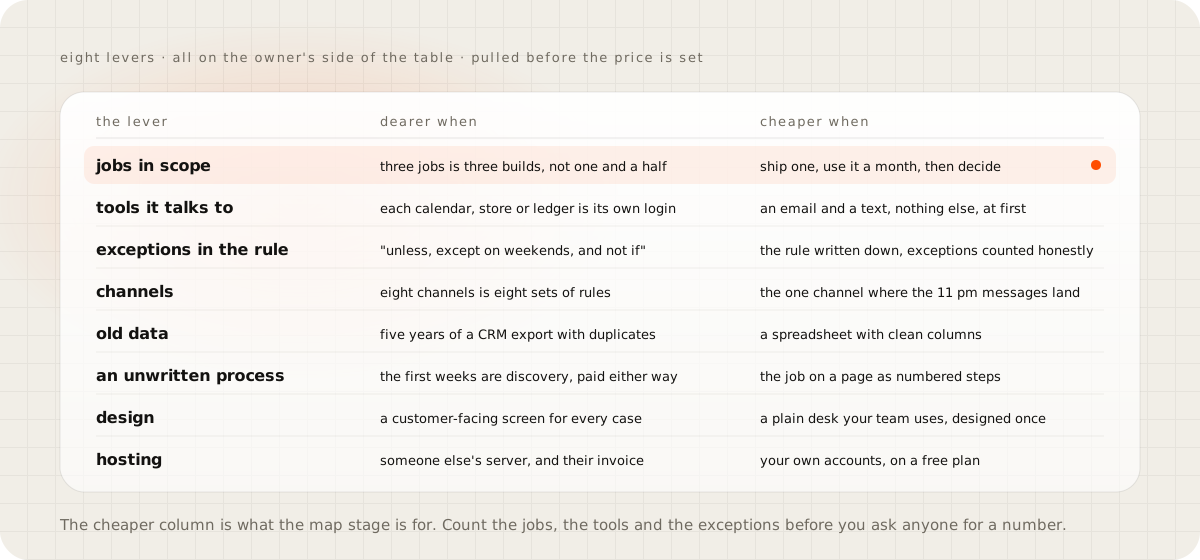
The levers are all on your side of the table, and most owners pull them without knowing.
The number of jobs in scope moves it most. One job, who gets this lead, is a small build. Three jobs, routing, quoting and the inbox, are three small builds, and the price is roughly three times, not one and a half. Ship one, use it for a month, then decide on the second. Picking that one is the guide on what to automate first.
The number of other tools it has to talk to comes next. Every calendar, store, accounting package or messaging channel is its own login, its own rules and its own way of breaking. The inbox's eight channels are eight of those. A lead desk that only needs to send an email and a text is cheap. One that must also write to your books and read your calendar is not.
The exceptions in the rule. A radius filter with a score is a day's logic. The same rule with "unless it is a premium installer, except on weekends, and not if they have three jobs booked" is a week, and each exception is a place for a bug to live. Write the rule down first, and be honest about how many exceptions are real.
Moving old data. A spreadsheet with clean columns imports in an hour. Five years of a CRM export with duplicates and free-text notes is a project of its own. Whether the process is written down at all, because if it is not, the first weeks are discovery rather than building, and you pay for them either way. And who hosts it, because a system on your own accounts is cheaper to run than one on mine, and I will not host it for you for reasons the guide on owning your data explains.
Hourly or fixed#
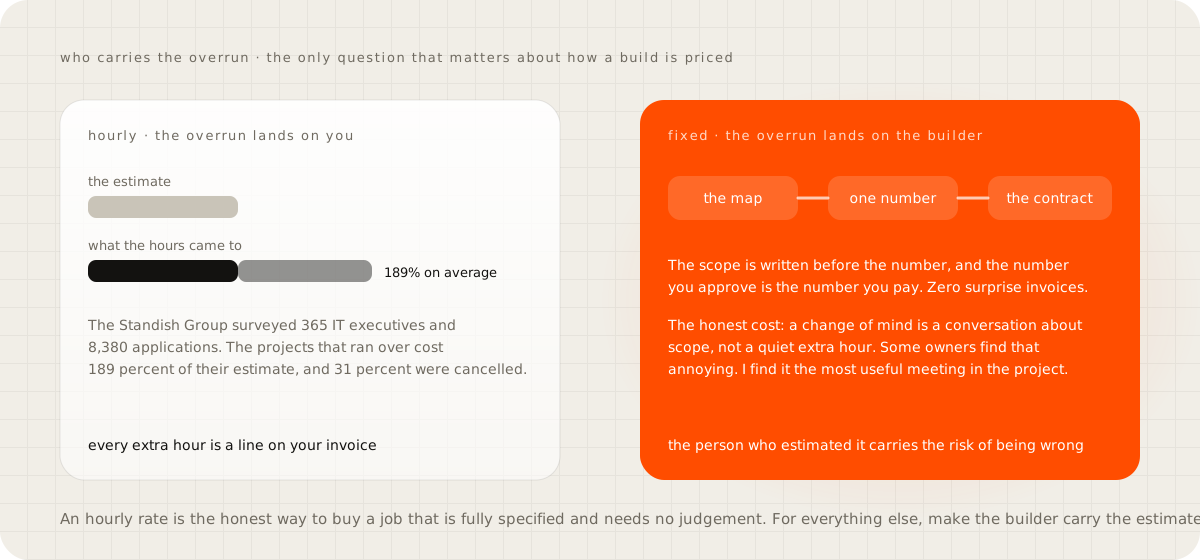
I price the work, not the hour, and the scope is the contract. The number you approve at the map stage is the number you pay, with zero surprise invoices, which is a promise printed on the homepage so you can hold me to it.
The reason is who carries the risk. An hourly rate puts the overrun on you: when the job turns out harder, the invoice grows, and Standish's 189 percent average is what that looks like across a lot of projects. A fixed price puts the overrun on the builder, which is where it belongs, because the builder is the one who estimated it. The honest cost of fixed is that a change of mind is a conversation about scope rather than a quiet extra hour, and some owners find that conversation annoying. I find it the most useful meeting in the project.
Clutch's guide also says the most common hourly rate on its platform is 24 to 49 dollars. That rate is real and it is the honest way to buy a job that is fully specified and needs no judgement. What it does not buy is the map, the fixed number, the design and the build from one person, or the handover on your own accounts.
The running cost is not the build cost#
Owners fold the two together and get the wrong answer. The build is the cost. The running, sized to a small business, is a few dollars a month. The ledger on the homepage is for a lead desk like the routing hub: hosting on Cloudflare's free plan, database and storage on free plans, email delivery free, the domain 10 to 15 dollars a year, AI replies 2 to 5 dollars a month pay per use. About 5 dollars a month, all in, with every account in your name. The free plan allows 100,000 requests a day, a busy small business uses about 2,000, and the next tier up is 5 dollars a month.
Set that against what the same problem costs to rent. Jobber's Core plan is 29 to 49 dollars a month for one user and 29 for every extra user, so a crew of six on the entry plan is paying the seat fee five times over, forever. The glue between tools, Zapier's Professional plan, starts at 19.99 a month for 750 tasks and climbs with volume. None of those is a bad product. They are a rent, and a rent scales with your headcount and your success, while a system you own scales with a plan change on an account you already hold. A store's platform fee has the same shape, and the guide on the real monthly cost of a small online store shows it growing with every sale.
"Can I get it cheaper offshore?"#
Yes, and sometimes you should. If the job is fully written down, needs no design decisions, and someone on your side will manage the work and check it, a team at Clutch's most common rate will build it for less than I will. I have told owners exactly that on the call.
What you pay a one-person studio for is the part before the code and the part after it. The call that says whether it is worth building at all. The map that turns "it is done by hand" into a rule with its exceptions counted. One person designing and building, so nothing is lost between the two. The system live from the first week so you can change your mind cheaply. And the handover onto your own accounts with documentation, so the price you paid is the last one. If you have all of that already, buy the hours.
Write the job down, then count#
Before you ask anyone for a price, write the one job on a page as numbered steps, with the decision at each step and what it depends on. Then count three things on the page: the jobs, the other tools it touches, and the exceptions. Those three numbers move the price more than anything a builder does, and bringing them to a call means the number you hear back is about your job and not about an average.
The cost estimator takes the type of build, from an automation to a marketplace, its tier, its parts and the rules it must meet, and prints what the market charges for that shape: the hours from published breakdowns, the cost at the rates of the region you pick, the weeks, the team, and the running cost, every figure with its source. It prints no number of mine, for the reason above.
Questions people ask
How much does custom software cost for a small business?
Less than the agency average and more than a subscription's first month. Clutch's verified reviews put the average software project at 132,480 dollars over about 13 months, which is what companies pay when they buy software the way large companies do. A small business buys one narrow job, priced fixed at the map stage, and I would rather tell you yours on a call than print a range a different job will be held to.
What makes custom software more expensive?
The number of jobs in scope, the number of other tools it has to talk to, the exceptions in the rule, the number of channels, moving old data, and a process that is not written down yet. Each of those is a lever you hold before the price is set.
Is hourly or fixed price better for a small business?
Fixed, if the scope is written. An hourly rate moves the risk of an overrun onto you, and the Standish Group's classic survey put the average overrun at 189 percent of the estimate. A fixed price makes the builder carry that risk, and turns a change of mind into a conversation about scope instead of a surprise invoice.
What does custom software cost to run each month?
Sized to a small business, a few dollars. The ledger on the homepage puts a lead desk at about 5 dollars a month, on a free hosting plan that allows 100,000 requests a day against the roughly 2,000 a busy small business uses. The build is the cost. The running is not.