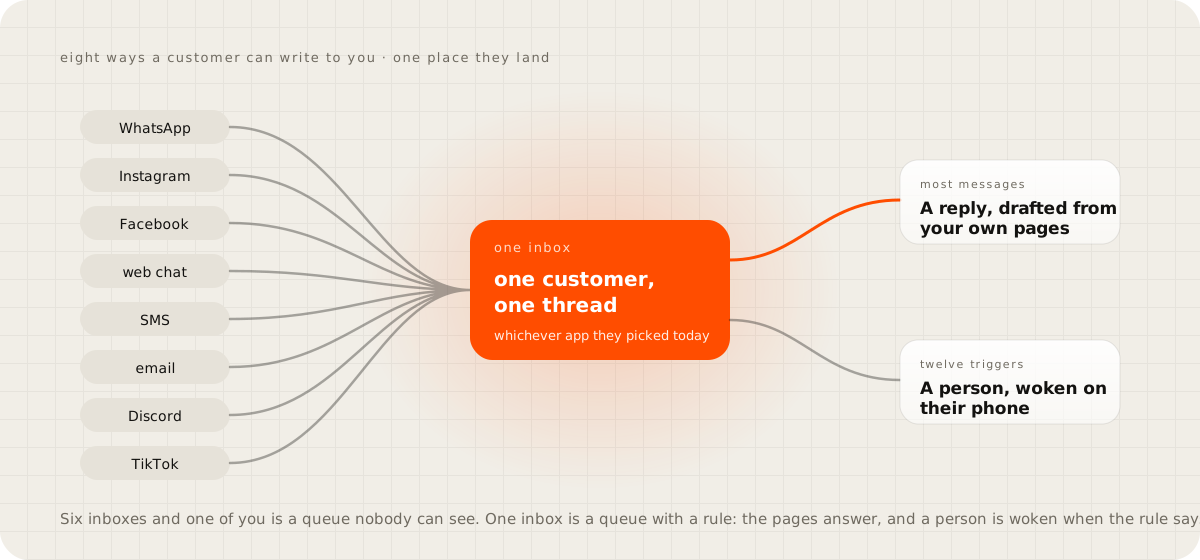
The customer who asked on Instagram at 11 pm and again by email at 7 am is one person with one question. In most small businesses they are two unread messages in two apps that two different people might see, or nobody will. The inbox I built joins eight channels, WhatsApp, Instagram, Facebook, web chat, SMS, email, Discord and TikTok, into one thread per customer. It drafts a reply from the business's own pages, and it wakes a human through twelve triggers when the message is about money, a promise or a person. On the homepage the 11 pm message reads "hey is saturday install still possible??" and the reply goes out at 23:03:41 while the owner sleeps.
One inbox for all customer messages is the part every vendor sells, and it is the easy part. The hard part is the second half of this title: deciding what the AI may answer, what it must hand over, and how you know afterwards which of the two happened. This is how the working version does both, the rules the channels themselves impose, and the places where I would not let it speak.
The short version Put every channel into one thread per customer, so the question exists once. Let the AI answer only what your own pages already answer, and make every draft cite its page. Write down the triggers that stop it, money, a promise, a person asking for a person, and route those to a phone with the thread attached. Dry-run each channel before it sends anything real, and read the drafts for two weeks before it runs alone.
Why six inboxes lose messages#
Each app is its own queue with its own badge, and the customer chooses the app, not you. They saw your Instagram post, so they asked there. Their friend sent your number, so they texted. They found the site, so they used the chat.
The same person can arrive by three doors in a week, and each door has a different person behind it, or the same person checking six badges between jobs. The one that came in at 11 pm is the one that gets lost, because at 11 pm nobody is checking any of them.
The customer's clock does not care which app they used. EZ Texting's 2026 survey of 959 US consumers found 70 percent expect a reply from a business within an hour of sending a message. The vendors sell the merge, six badges into one screen, and the merge is worth having. But a merged inbox at 11 pm is still a screen nobody is looking at. The useful question is who, or what, answers when you are asleep, and that is the difference between an inbox and a worker.
What one inbox actually joins#
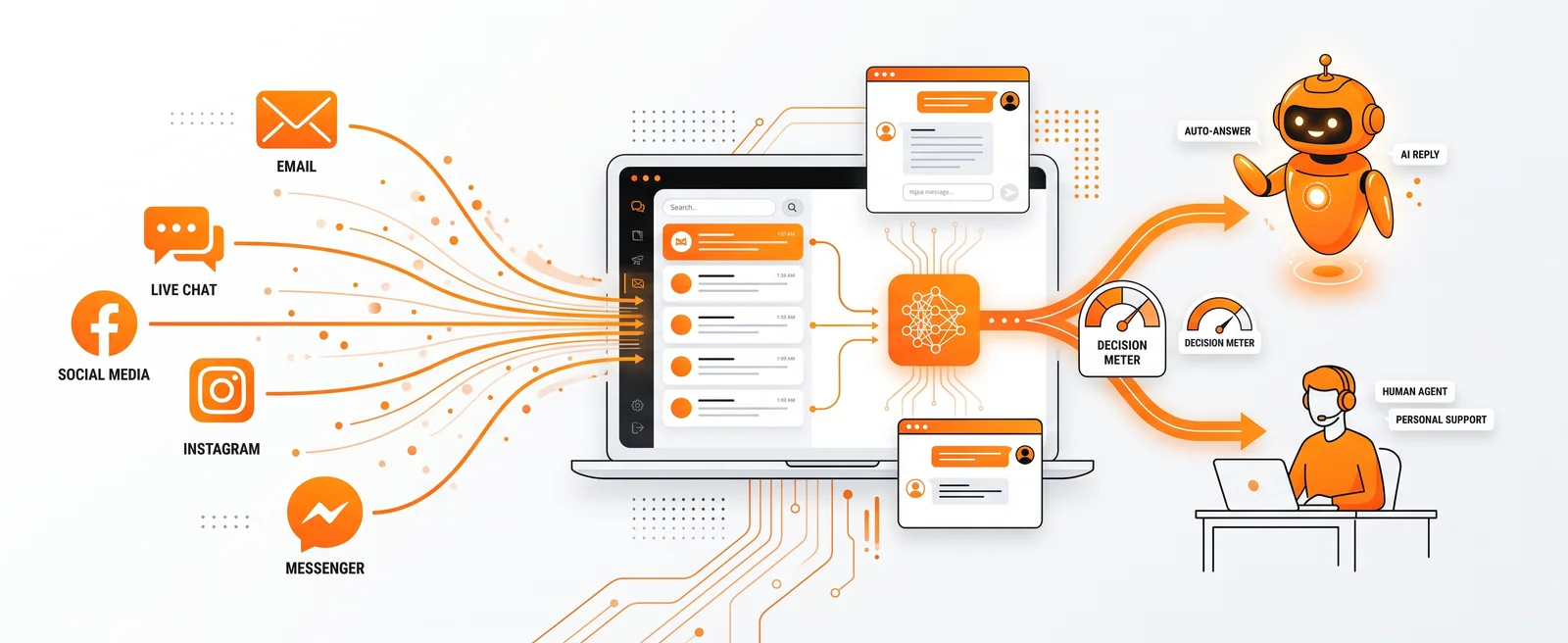
Eight channels, in the version I built: WhatsApp, Instagram, Facebook, web chat, SMS, email, Discord and TikTok. The online store's orders and products sit alongside, so a question about an order is answered with the order. Every message lands in one queue, and the same phone number or handle is stitched into one thread, so the Instagram question and the follow-up email sit together. Replies go out on the channel the customer used. The person on your side reads and answers from a phone app with push alerts, which matters more than any dashboard, because the person on your side is usually in a van.
The channels carry rules most owners learn by having a message refused. On WhatsApp, Twilio's documentation puts it plainly. A customer's message opens a customer service window that lasts 24 hours after their last inbound message. You can write freely inside it, and outside it you may only send a template that Meta has approved. So the follow-up you meant to send on Tuesday about Monday's question is not a message, it is a template, or it is nothing. The inbox tracks the window on every WhatsApp thread and picks the template when the window has closed.
SMS has the law behind it. The FCC's rules of February 2024 say a customer can withdraw consent to your texts through any reasonable means, STOP or otherwise, and you have to honour it within a reasonable time, at most ten business days. The inbox files every opt-out automatically, keeps quiet hours, and refuses to send a campaign text to a number that said no. None of that is clever. It is the sort of thing a person forgets at 4 pm on a Friday and a system does not.
How the AI drafts a reply from your own pages#
The AI does not know your business. It reads it. The inbox crawls your website, cuts the pages into passages of a few hundred words, and indexes them so a question can be matched to the passage that answers it. Every draft carries the page it drew from, so when a customer asks whether you install over cracked concrete the answer comes from your prep guide, section three, and says so. Disclosure rules sit on top: a page can be indexed and still be marked as something the AI must not quote a price from.
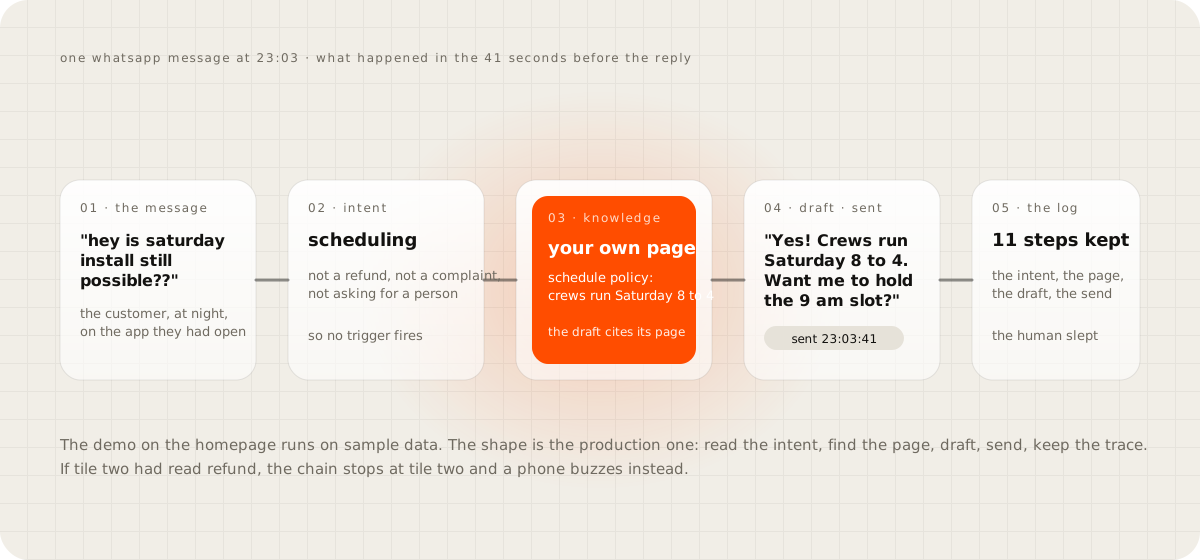
You can watch one trace on the homepage demo. The 11 pm WhatsApp message is read as a scheduling question, the schedule policy is found on the site, the reply is drafted, "Yes! Crews run Saturday 8 to 4. Want me to hold the 9 am slot?", and sent 41 seconds after the message arrived.
Eleven steps are logged. The demo runs on sample data, but the shape is the production one, and the log is the part I would not give up.
Two design choices carry the safety. The AI has sixteen tools, and one of them is to stay silent, so a message it cannot answer from a page gets no invented answer. And it runs on three sizes of model with a daily budget cap, so a busy day cannot become a large bill. The cheap model handles the plain questions and the expensive one is kept for the hard ones.
The honest limit is the first one. If the answer is not on your website, the AI cannot answer it well, and no amount of tuning changes that. Building the inbox for a business begins with writing the ten pages that answer the ten questions they get every week, and I have not found a business that already had all ten.
When a human should be woken#
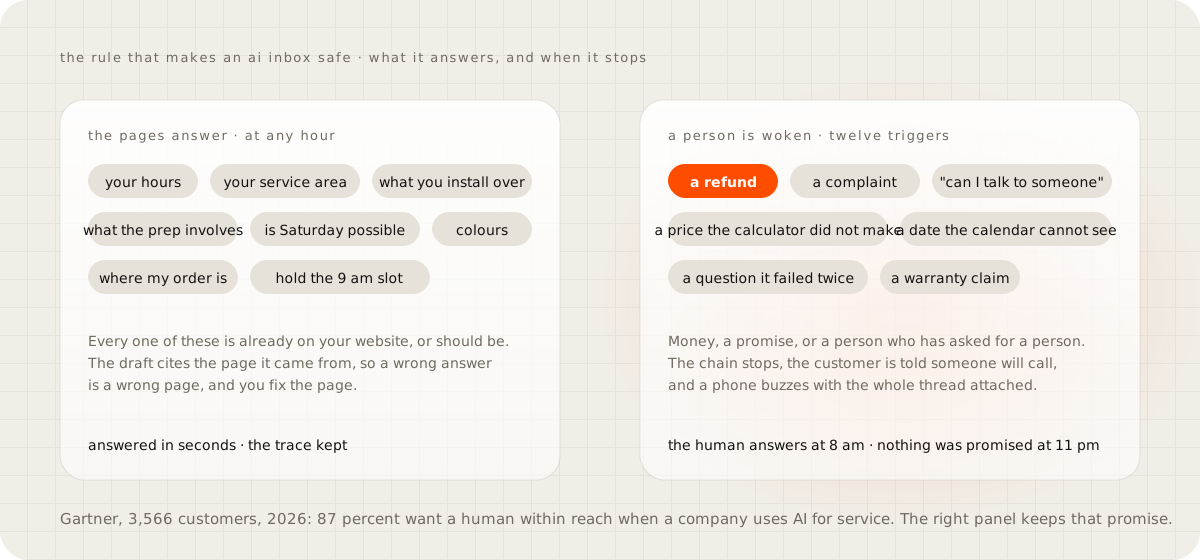
Twelve triggers decide it, and the rule behind all twelve is money, a promise, or a person. A refund. A complaint, or a message that reads angry. Anyone who asks for a human. A price your calculator did not produce. A date your calendar cannot show. A question the AI has already failed at twice. A warranty claim.
When one fires, the chain stops and the customer is told that a person will be in touch. A phone buzzes with the whole thread attached, so the person answering at 8 am has read everything by the time they type.
The demo's offer to hold the 9 am slot is a case of the same rule, not an exception to it. The AI may offer a slot only because the calendar is connected and the slot is visibly open. Without a connected calendar that offer is a promise, and a promise wakes a person. Where a business cannot connect its calendar, I would take the scheduling tool away and let the AI say that someone will confirm the date in the morning.
Gartner's survey of 3,566 customers, run in February and March 2026, found 87 percent say a company using generative AI for customer service must preserve access to a human agent. The twelve triggers are how you keep that promise without a person reading every message.
"My customers will hate talking to a bot"#
They hate being blocked from a person by one. Gartner's finding is about access, and the same customers are comfortable letting AI resolve a plain question. What burns them is the loop: the chatbot that cannot understand, will not hand over, and answers the refund question with a link to the returns page.
So do not hide it, and keep the human one message away. The AI answers the question your website already answers, at 11 pm, when the alternative is silence until 8 am. The person answers everything else at 8 am, having read the thread. On the homepage the 11 pm answer is a real answer, from your own schedule policy, and the customer was not going to get a better one from a sleeping owner. That is the trade, and put that way I have not met an owner who refused it.
What it costs and what breaks#
The running cost is small. On the homepage ledger AI replies are the only line that is not free, 2 to 5 dollars a month, pay per use, for a business with about 900 messages a month. The rest of the inbox runs on the same free-plan infrastructure as the lead desk. The argument for owning it rather than renting a seat per person is in the guide on custom software for a small business.
What breaks is the channels. An app changes its login or its rules and a channel goes quiet, which is why the inbox checks every channel's connection on a schedule and tells you when one has dropped. TikTok is the least exercised of the eight in my build and I treat it as a beta. And a wrong page makes a wrong answer, which is why every draft cites its page.
The tool I lean on hardest is the sandbox. Before any channel sends a real message, the whole pipeline is run dry against real questions: intent, page, draft, and which trigger would have fired, with nothing sent. Then a channel goes live in draft mode, where a person reads every reply before it goes out. Two weeks of that, and you know exactly what it will say.
Start with one channel this week#
Look at last month's messages and find the channel where the 11 pm ones land. That channel goes first. Then write the ten questions you answer every week, and next to each the page on your site where the answer lives. Where there is no page, write it this week, in your own words, because that page is the knowledge base and the AI will quote it.
Connect the one channel, read every draft for two weeks, and only then let it send. The next channel takes an afternoon.
If the lead that comes out of a message should reach a crew in seconds, that is the routing guide. The case for answering in the first five minutes at all is the guide on lead response time. Tap a channel on the homepage demo to see the same brain answer on each one. If you want me to look at your channels, send a message. I will tell you which one to connect first and which ten pages to write.
Questions people ask
What is the difference between a shared inbox and an AI inbox?
A shared inbox merges the channels so a person can answer them from one screen. An AI inbox does that and drafts the answer, from your own pages, so the customer hears back at 11 pm. The part that matters is the rule for when the AI stops and a person is woken.
Can an AI answer WhatsApp and Instagram messages for a small business?
Yes, inside the channels' own rules. On WhatsApp a business can write freely for 24 hours after the customer's last message and must use an approved template after that. On SMS the customer's consent and their right to stop govern everything. A good inbox keeps those rules for you.
What should the AI never answer?
Anything with money, a promise or a person in it. A refund, a complaint, a price your calculator did not produce, a date your calendar cannot show, and anyone who asks for a human. Those stop the chain and wake someone, with the whole thread attached.
Why can I not just message a WhatsApp customer the next day?
Because the customer service window has closed. Twilio's documentation puts it plainly: the window lasts 24 hours after the last inbound message, and outside it you may only send an approved template. The inbox tracks the window so you do not find out by having a message refused.
How do I stop the AI saying something wrong?
Make it answer only from your pages and cite the page in every draft. Then a wrong answer is a wrong page, and you fix the page once. Dry-run every channel in a sandbox before it sends anything real, and read the drafts for two weeks before you let it send unsupervised.
Sources
- Key concepts and terms for the WhatsApp Business Platform, Twilio documentation
- Gartner survey finds 87% of customers say companies using GenAI for customer service must provide access to a human agent, Gartner, August 2026
- FCC adopts new rules to empower consumers to stop unwanted robocalls and robotexts, Federal Communications Commission, February 2024
- 2026 Consumer Texting Behavior Report, EZ Texting, April 2026