Five minutes. That is how long a new lead stays warm. Every study I have read lands on the same number, from James Oldroyd's data on more than 15,000 leads to Workato's test of 114 companies this March. Almost nobody hits it by hand. The routing hub I built for a network of concrete-coating installers hits it because there is no hand in it. A lead is assigned in 2.4 seconds median, and a crew that sits on it loses it to the next crew in 15 minutes.
Lead response time for a small business is the gap between the moment someone asks and the moment a person with a name answers them. An autoresponder does not count. A person counts, or something that can do what the person would have done. This is what the window looks like, what closing it costs, why owners miss it when they care, and how to hold it at 11 pm without staying up.
The short version Acknowledge every lead inside five minutes with something specific to them, put one named person on it, and give that person a deadline that costs them the lead if they miss it. Do it with a system, because you never miss the window for lack of caring. You miss it because the lead arrives while you are on a ladder, at dinner, or asleep. Measure your median before you fix anything.
How fast do people actually expect a reply#
The number everyone quotes comes from one piece of work. James Oldroyd, then at MIT, took three years of data from six companies, more than 15,000 leads and more than 100,000 call attempts, and published it as the Lead Response Management study. The odds of qualifying a lead fell fourfold between a five-minute reply and a ten-minute one, and 21-fold by the time the reply stretched to 30 minutes. The odds of even reaching the person fell more than tenfold inside the first hour. He and two co-authors put it flatly in the Harvard Business Review: most companies are not responding nearly fast enough.
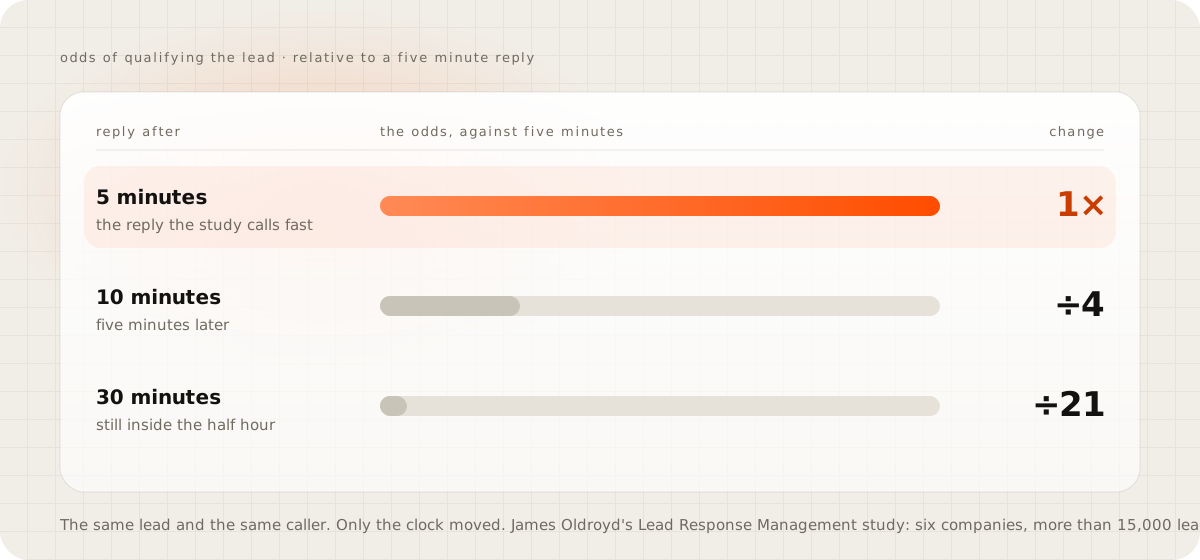
Those were sales teams phoning people who had filled in a web form, which is not a roofer in Ohio. So I hold the exact multiples loosely. The direction I hold firmly, because the consumer side says the same thing.
EZ Texting's 2026 survey of 959 US consumers found 72 percent read a business text within five minutes, 82 percent reply within 15, and 70 percent expect a reply from a business within an hour. The customer is sitting there with the phone in their hand. They sent the form and kept scrolling, and the next result on that page is your competitor.
So my working rule is this. Five minutes to acknowledge with something specific. An hour for a person. The same working day is the outer edge. "Monday" is not a response time, it is a lost lead with a receipt.
What a slow reply actually costs#
The lead does not tell you when you lost them. They hire someone else and you never hear about it, which is why owners believe they answer everything.
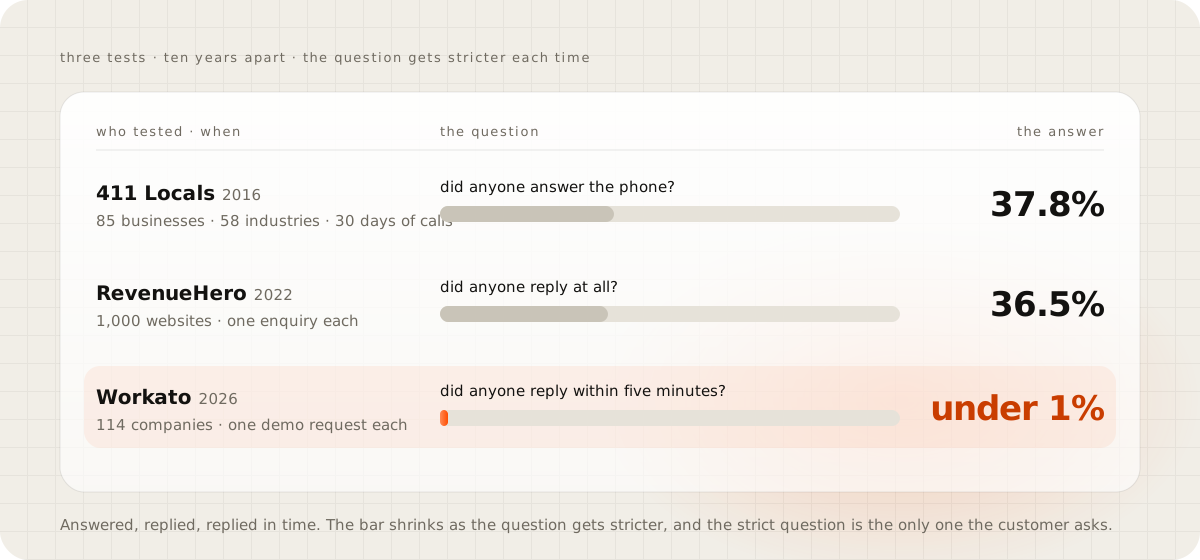
In January 2016 411 Locals monitored the phones of 85 small businesses across 58 industries for 30 days. The businesses answered 37.8 percent of calls. Another 37.8 percent went to voicemail, 24.3 percent got nothing at all, and 70 percent of the businesses answered fewer than half of their calls. I doubt one of those owners would have guessed their own number. Put your own calls a week against those answer rates in the missed call cost calculator.
Forms are no better, even with money behind them. In July 2022 RevenueHero sent an enquiry to 1,000 B2B websites. 365 replied, and the average reply took a day, five hours and 17 minutes.
In March 2026 Workato did the same to 114 companies. More than 99 percent failed to reply within five minutes, and nearly one in five never replied by email at all. The companies that had bought lead routing software still averaged 3 hours and 32 minutes.
What that costs you in dollars is a number I do not have and you do. Start from your average job, the leads you get in a month, and the share that arrive outside the hours you actually pick up. The lead response time calculator does that arithmetic with the study's own multiples, and takes your rows for the median. On the homepage I put it as bluntly as I can: one missed job a month outspends the whole cost of building a system inside a year. If your average job is a few hundred dollars the maths is different, and the answer may be a group text. If it is four figures, the maths is not close.
Why owners miss the window even when they care#
The businesses I have built for shared one shape of failure, and none of it was laziness. The website form emails one inbox. That inbox belongs to the owner, who is the busiest person in the company, and the email lands between a supplier invoice and a fuel receipt.
The phone rings while they are on a ladder. And leads keep arriving after six, when the office, such as it is, has gone home. It is the first symptom on the homepage for a reason: your lead came in Friday night, somebody saw it Monday.
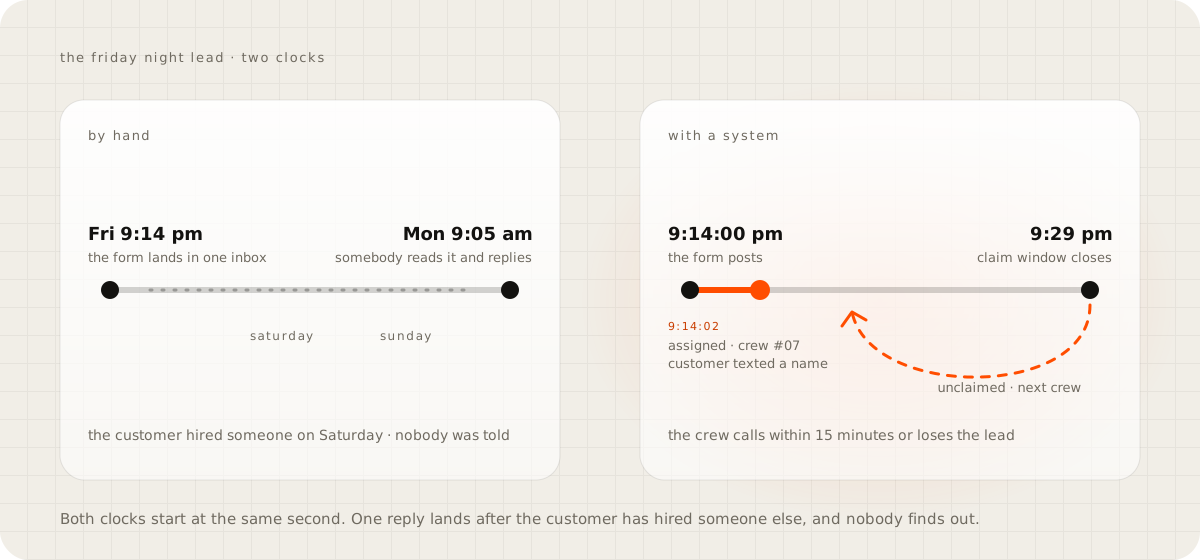
The usual shortcut is an autoresponder. "Thanks for reaching out, someone will be in touch within 24 to 48 hours." It feels like a reply and it is not one. It is a receipt, and worse, it is a written promise to be slow. The customer now knows nothing will happen today and behaves accordingly. Nothing in that email carries a name, a time, or any sign that a person has looked at what they wrote.
I have made the same mistake from the other side. The first version of the routing hub shipped with a 48-hour response deadline, switched off by default, and a nine o'clock batch that held every overnight lead until breakfast. Both settings were mine. A 48-hour deadline is a reminder about a lead that has already hired someone else. What replaced them is in the guide on routing leads to the nearest crew.
What should happen in the first five minutes#
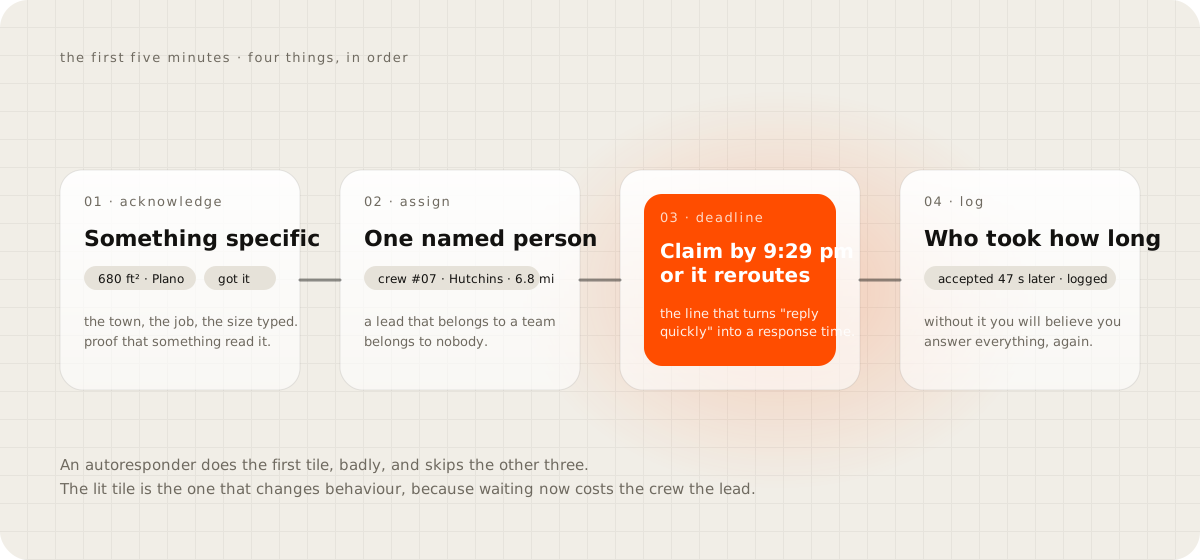
Four things, and the autoresponder does only the first, badly.
Acknowledge with something specific. The town, the job, the size they typed. "Got your message about the 680 square foot garage in Plano" tells the customer that a system or a person has read it. "Thanks for reaching out" tells them nothing.
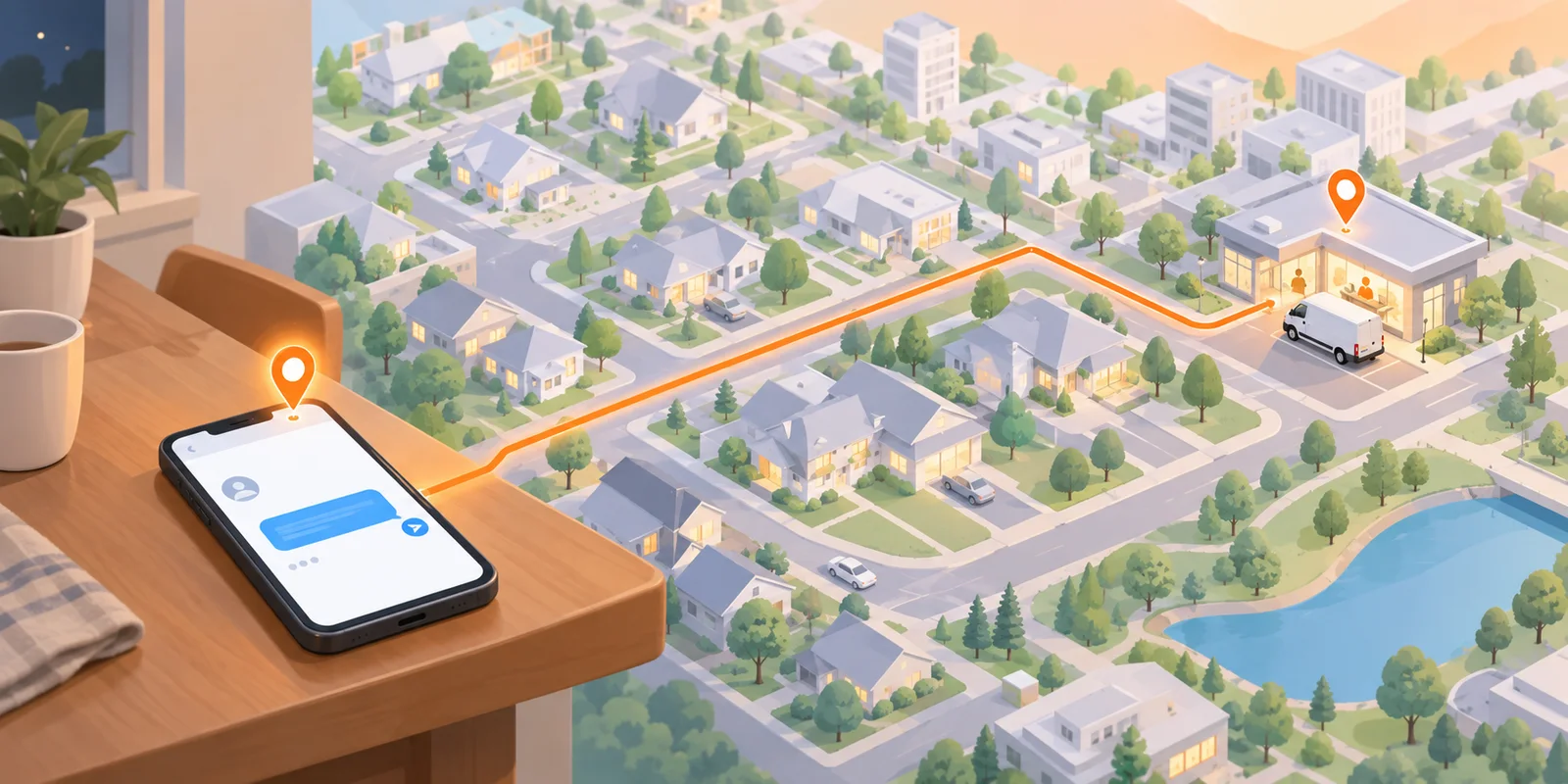
Assign to one named person. A lead that belongs to a team belongs to nobody. In the hub the score picks one crew, and the customer's text names them: you are matched with Hutchins Coatings, 6.8 miles from you, they call within 15 minutes. A name and a time, two things a person can hold you to.
Set a deadline that costs someone the lead. The email the crew gets ends with a time: claim it by then or it reroutes. When the window closes with no claim, the next crew on the list gets the same email and the owner sees it in the log. That one line turns "please respond quickly" into a response time. Nobody has to nag.
Log it. Who got it, when, and how long they took. Without that you cannot measure anything, and within a month you will believe you answer everything again.
You can watch all four on the routing desk on the homepage. Send a lead with your own zip and the card shows it scored, assigned and messaged, with the claim deadline in the crew's email. The demo runs on sample crews. The timings are the production ones: 2.4 seconds median from the form post to the assignment.
How to reply after hours without staying up#
Count how many of last month's leads arrived outside the hours you pick up. It takes an afternoon and it decides how much of this section applies to you. Then decide who answers at 11 pm. You have three honest options.
An answering service takes messages. It saves the customer from hearing voicemail, which helps, but a message is still a message, and you still call back in the morning.
A text-back is the cheapest real fix. A missed call or a form post triggers a text within seconds with a name and a time. "This is Haseeb at Norvahl, I have your message about the garage, and I will call you at 8:15 tomorrow." It is the first tile above, done well, and it needs no AI.
An AI worker answers. The inbox I built joins eight channels, WhatsApp, Instagram, SMS, email and web chat among them. It drafts its replies from your own pages: your hours, your service area, what you install over, what the prep involves. It can hold a slot. It does not invent a price.
The homepage demo shows the 11 pm WhatsApp message, "is saturday install still possible??", answered from the schedule policy while the owner sleeps. Twelve triggers decide when a human is woken instead, and a refund or a complaint should always be among them. The long version is the guide on one inbox for every channel.
Where I draw the line: the worker never promises a date it cannot see on a calendar, and never quotes a price your calculator did not produce. Everything else a customer asks at 11 pm is on your website already, and if it is not, that is the first thing to fix.
How often should you follow up on an estimate#
The numbers that float around this question, "80 percent of sales close after the fifth touch" and its cousins, have no source I could find, so I will not repeat them as fact. What I can tell you is what works mechanically.
Set the follow-up date the moment the quote goes out, not when you remember. In my own desk every lead carries a stage and a follow-up date, and the overview lists the ones due today. A quote that expires gives you a true reason to call: the price holds until Thursday. The quoting engine I built locks its price for 24 hours for exactly that reason, which is the story of the guide on instant quotes. Two follow-ups with a reason each beat five that say "just checking in".
"I answer every lead myself, so I do not need a system"#
You answer every lead you see. That is a different claim, and the 411 Locals numbers above are what it looks like from the outside. 70 percent of those owners answered fewer than half of their calls, and I would bet most of them said this same sentence.
The test is cheap. Pull last month's enquiries from your form tool, your call log and your inbox. Put the time each arrived next to the time a person first replied. Take the median, not the average, because one Monday reply to a Friday lead makes the average look worse than your week, and one instant reply makes it look better. Then count the ones with no reply at all.
If the median is under an hour and the second column is empty, you do not need me. Two or three of you in one town, a group text and a rule that the first to reply takes the job, will hold that. Build a system when leads arrive while nobody is awake, when more than a couple of people could take one, or when the second column was not empty and you did not know. Which piece to build first is the guide on what to automate first.
I hold myself to the same measure. My own desk records the time from a message landing to my first reply, and reports the median against a promise of one working day. The number in this guide is one I have to live by.
Measure yours this week#
Do the two-column exercise for the last thirty days and write the median at the top of the page. The calculator's measure mode takes the two columns pasted from a spreadsheet and hands back the median and the never column. Then pick the smallest fix that moves it. A text-back with a name and a time if the median is hours. Routing with a claim window if leads go to more than one person. The after-hours worker if the second column fills up at night. Send a lead through the routing desk with your own zip and watch what a five-minute reply looks like from the customer's side.
Questions people ask
What is a good lead response time for a small business?
Under five minutes to acknowledge with something specific, under an hour for a named person to make contact, and never past the same working day. Measure the median across a month, not the best case you remember.
Does the five minute rule apply to a trade business or only to software sales?
The 21-fold figure comes from sales teams phoning web leads, so hold the exact multiple loosely. The direction holds everywhere. EZ Texting's 2026 survey found 70 percent of consumers expect a reply from a business within an hour, and the customer with a phone in their hand is already looking at the next result.
Is an autoresponder a reply?
No. It is a receipt, and one that promises to be slow. A reply names a person, says something specific about the enquiry, and gives a time the customer can hold you to.
Should a small business reply to leads at night?
Yes, and not by staying up. A text-back with a name and a morning time covers most of it. An AI worker that answers from your own pages covers the questions, and wakes you only for the ones with money or a promise in them.
How do I measure my lead response time?
Two columns for last month's enquiries, when each arrived and when a person first replied. Take the median, then count the rows with no reply at all. The second number is usually the surprise.
Sources
- The Lead Response Management study, James Oldroyd and InsideSales.com
- The Short Life of Online Sales Leads, Harvard Business Review, March 2011
- 2026 Consumer Texting Behavior Report, EZ Texting, April 2026
- Small business owners don't answer 62% of phone calls, 411 Locals, January 2016
- Lead response time study of 1,000 B2B websites, RevenueHero, July 2022
- B2B lead response times from 114 companies, Workato, March 2026