Automate the step closest to the money first. For most small businesses that is the gap between a customer asking and a person answering, and it can be closed in an afternoon with one trigger and one action. The lead desk I built assigns a lead in 2.4 seconds median and reroutes an ignored one in 15 minutes. The inbox and the reports came after that first step held.
Owners tend to start somewhere else. They automate the chore that annoys them most, invoice reminders or a social post, because it is the thing they notice on a Tuesday. What to automate first is a money question, not a mood question. This is how I pick the step, the shape the first automation should take, the order I automate a lead in, and the point where a Zapier plan stops being the right tool.
The short version Find the step where a customer is waiting for you and money is leaking while they wait. Automate that step with one trigger and one action, on the free plan of whatever tool you already have. Measure the one number it was meant to move. Then take the next step along the same path, from the enquiry towards the invoice. Leave complaints, refunds and anything you still do differently every week for last.
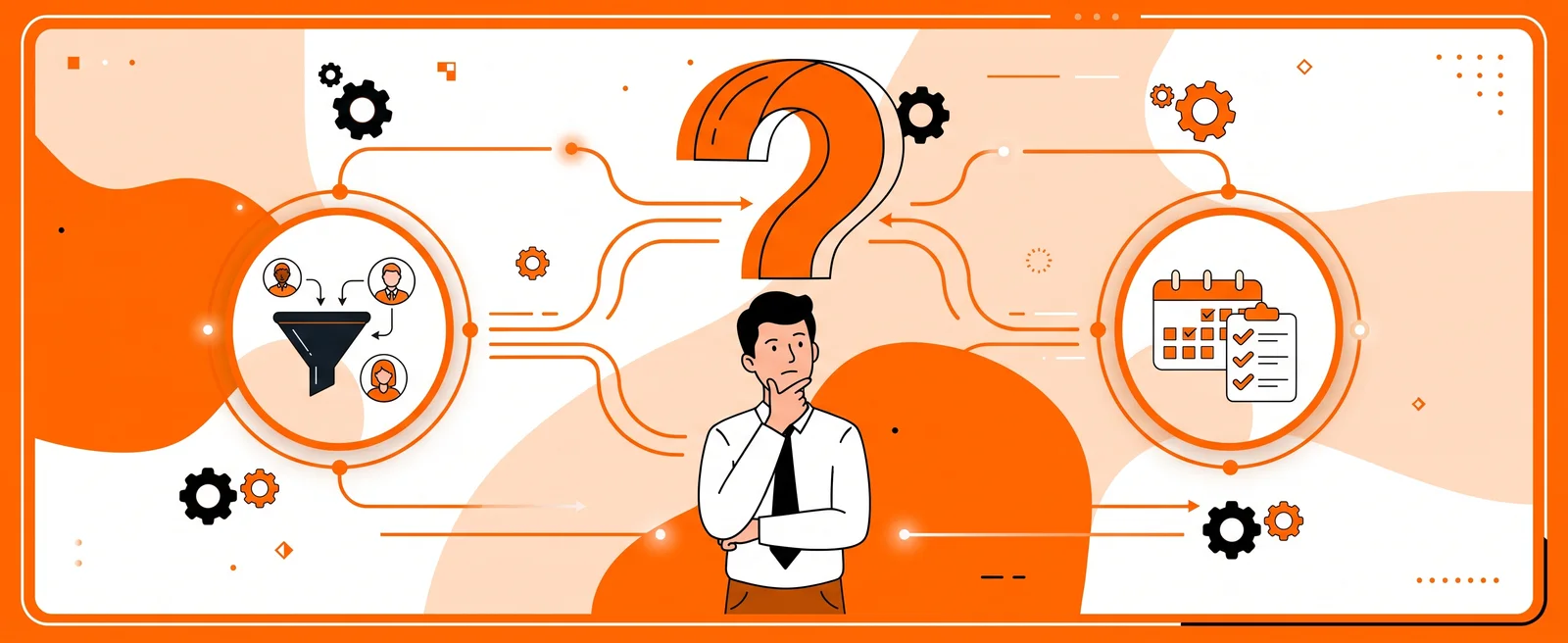
Start where the money leaks, not where the annoyance is#
The chores that annoy you are rarely the ones costing you jobs. Zapier's own 2021 report was built on a survey of 2,000 US knowledge workers at small and mid-sized businesses. It lists what people automate most. Manual data entry at 38 percent, document creation and filing at 32 percent, and only then lead management, at 30 percent. Data entry is the annoyance. The lead is the money.
Follow the path a dollar takes through your business and mark where it waits. A customer sends a form at 9 pm and waits until someone reads it. They get a quote and wait for the follow-up that never comes. They accept and wait for a date. The order arrives and waits to be typed into the books.
Every wait is a place the customer can leave, and the earlier in the path the wait sits, the more of them leave.
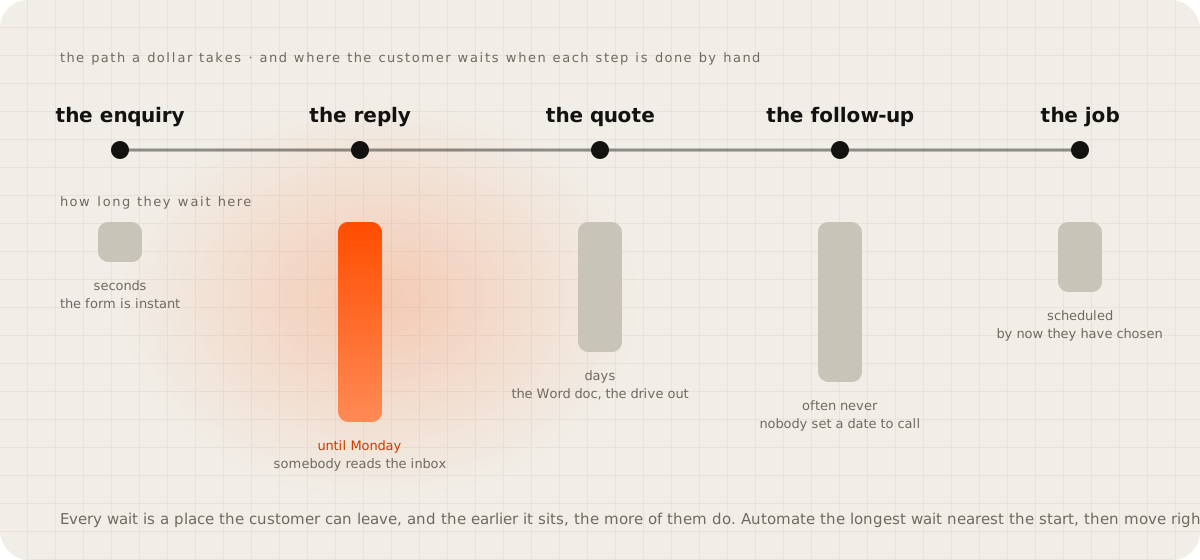
So the first automation sits at the first wait. In the businesses I have built for, that is the reply to a lead, which is why the pillar guide on how fast to reply exists. James Oldroyd's Lead Response Management study, six companies and more than 15,000 leads, found the odds of qualifying a lead fell 21-fold when the reply stretched from five minutes to 30. No invoice reminder has a number like that behind it.
One trigger, one action#
The first automation should be the simplest shape there is. Zapier's own definition is the right one: a trigger, the event that starts it, such as a new form entry, and an action, what happens next, such as sending a message. Its free plan allows exactly that, two-step workflows with one trigger and one action, at 100 tasks a month. For most small businesses, 100 leads a month is a good problem to have, so the first automation costs nothing to run.
The one I would build first: the form posts, or a call is missed, and the customer gets a text within seconds with a name and a time. "This is Haseeb at Norvahl, I have your message about the garage, and I will call you at 8:15 tomorrow." One trigger, one action, one number to watch. It is the first of the four things I argue should happen in the first five minutes, and it needs no AI and no build.
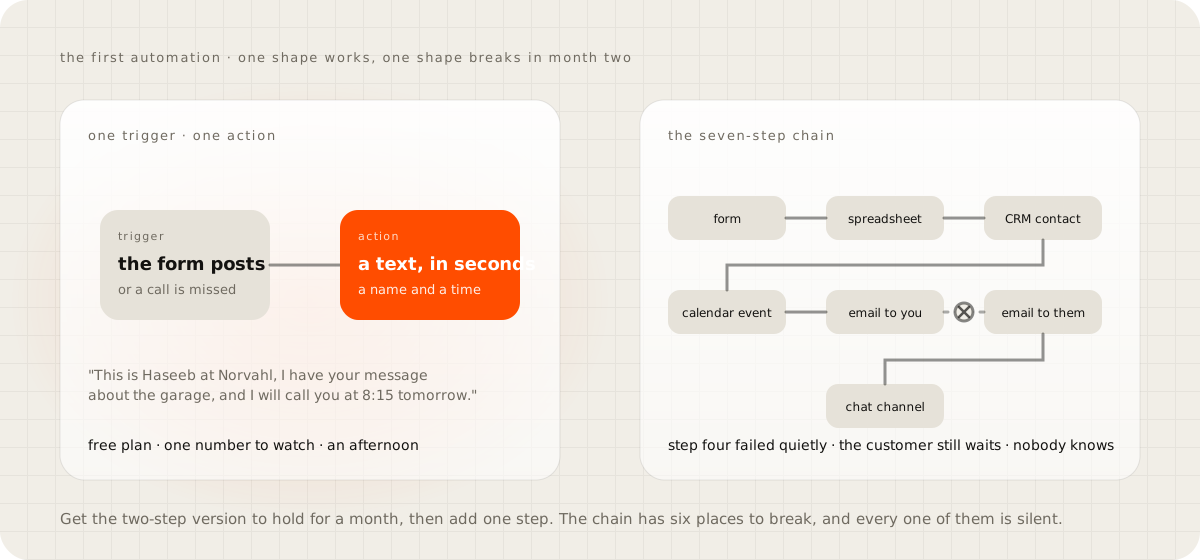
Resist the seven-step version. A chain that copies the form into a spreadsheet, creates a contact, adds a calendar event, sends two emails and posts to a chat channel has six places to break. When step four fails silently the customer still waits, and now nobody knows. Get the two-step version to hold for a month. Then add the next step.
The order I automate a lead in#
The lead desk on the homepage looks like one system. It is the sum of single steps, each one added when the previous one held, and the order they arrived in is the order I would give any business that sells a job.
Intake first: the form posts straight into a pipeline instead of an inbox, so nothing can be lost in email. Acknowledge next: the customer gets something specific back in seconds. Then assign: one named person gets the lead, chosen by a rule rather than by whoever reads the inbox. Then the deadline: a claim window, 15 minutes in the hub, after which the lead moves to the next person.
Only then the after-hours answer, the inbox that drafts replies from your own pages at 11 pm, which is the subject of the guide on one inbox for every channel. And last, the money steps: the quote that prices itself and the follow-up date that sets itself when the quote goes out.
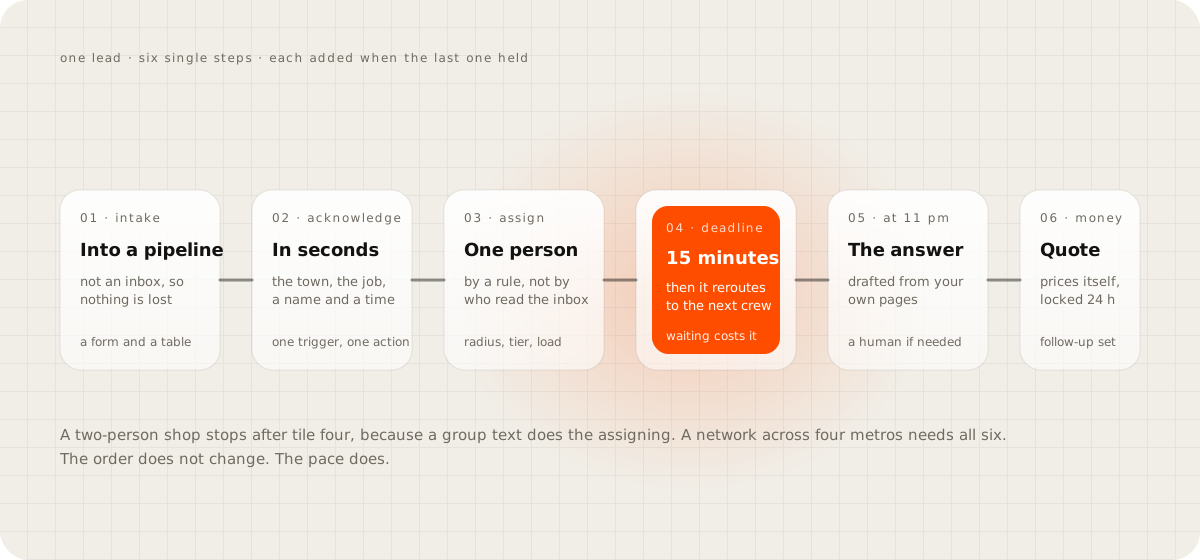
I would not change that order for a plumber, a coating installer or a print shop. I would change the pace. A two-person shop stops after the acknowledgement and the deadline, because a group text does the assigning. A network across four metros needs all six.
When Zapier stops being enough#
Rented glue is the right first tool and the wrong permanent one, and the line between them is visible. Zapier's Professional plan starts at 19.99 dollars a month for 750 tasks and the Team plan at 69, and the price climbs with tasks. A busy small business runs about 140 leads, 60 quotes and 900 messages in a month, by the ledger on the homepage, and each of those is several tasks once the chain grows. That is a bill that scales with your success, forever.
The second line is the rule. A trigger and an action can send a text. They cannot score twelve crews on distance, plan tier and this week's load, widen a radius when nobody covers the point, and reroute after 15 minutes. When the rule has weights, it is a system, and a system you own runs for about 5 dollars a month on Cloudflare's free plan at the volume above. The full argument for when to build is the guide on custom software for a small business.
The third line is silence. Rented chains fail quietly when an app changes its login or its fields, and the failure shows up as a customer who never heard back. A system you own logs every step and tells you when one fails. The routing hub writes the math of every assignment to a log for exactly that reason, and I still consider that the least glamorous and most valuable thing in it.
What not to automate first#
Anything with a complaint, a refund or a promise in it. Those are the messages where a wrong automatic answer costs more than a slow human one, and the inbox I built has twelve triggers whose whole job is to hand those to a person.
Anything you still do differently every week. Automation copies your process, so if the process is not settled you are paying to copy the wrong one, and you will pay again to change it. Run it by hand for a month, write the steps down, then automate the steps.
And the books. Accounting is the job every business has the same way, so the subscription already automates it better than a chain you build. Buy that one.
"I do not have time to set this up"#
The first automation takes an afternoon, and it saves you the time you currently spend reading a form on Monday and forwarding it. The honest cost is not the setup. It is the discipline of stopping at one step and watching the number for a month before adding the next, when every tool is inviting you to build the seven-step chain today.
If the afternoon is the problem, that tells you something too. The one thing you cannot find time for is usually the one thing a system should be doing, and the fit check on the homepage exists to say so plainly.
Pick the step this week#
Draw the dollar's path through your business on one page: enquiry, reply, quote, follow-up, job, invoice. Under each step write how long a customer waits there today, honestly, from last month's messages. Circle the longest wait nearest the left. That is the step. The picker does the same on one screen: the five waits, the stops set aside, the step circled, and whether it is a Zap, a system, a habit or a switch, with what it costs to run at your volume. Build the two-step version on the free plan of whatever you already use, write down the number it should move, and check it in thirty days.
Questions people ask
What should a small business automate first?
The step between a customer asking and a person answering, because that is where the money leaks and it can be done in an afternoon. A form post or a missed call that triggers a text with a name and a time. Everything else waits until that works.
Is Zapier enough to start with?
Yes. One trigger and one action is exactly what its free plan does, and the first automation should be that shape. It stops being enough when the rule has weights, when the volume makes the task count expensive, or when a chain of five steps breaks and nobody notices.
What should you never automate first?
Anything with a complaint, a refund or a promise in it, and anything you still do differently every week. Automation copies your process. If the process is not settled, you are paying to copy the wrong one.
How do I know the first automation worked?
Measure the one number it was meant to move, before and after. For the reply, that is the median time from a lead arriving to a person answering. If the number did not move, the automation was the wrong first step, and you have learned that cheaply.
Sources
- The 2021 state of business automation, Zapier
- 66% of small and mid-sized businesses say automation is essential, Zapier press release, April 2021
- What is a Zap, Zapier help centre
- Zapier plans and pricing
- The Lead Response Management study, James Oldroyd and InsideSales.com
- Workers pricing, Cloudflare developer documentation